
Views: 0 Author: Site Editor Publish Time: 2026-08-23 Origin: Site


Riding gives you ultimate freedom. Parking abruptly ends this feeling. You face an immediate security issue. Premium gear presents an incredibly easy target. Opportunistic thieves constantly scan busy streets. They spot high-value items instantly. A stolen lid leaves you completely stranded. An effective locking strategy prevents this nightmare scenario. It deters opportunistic criminals effectively. Good security protects structural integrity constantly. It secures expensive electronic accessories flawlessly. It accomplishes all this without damaging delicate paint.
Deploying your lock shouldn't take excessive time. We designed this guide for everyday riders. You will discover realistic, evidence-based security methods. We break down standard built-in solutions. We thoroughly evaluate modern aftermarket tools. You will learn specific, scenario-based defense strategies. Keep your gear entirely safe everywhere you park. Every rider deserves peace of mind.
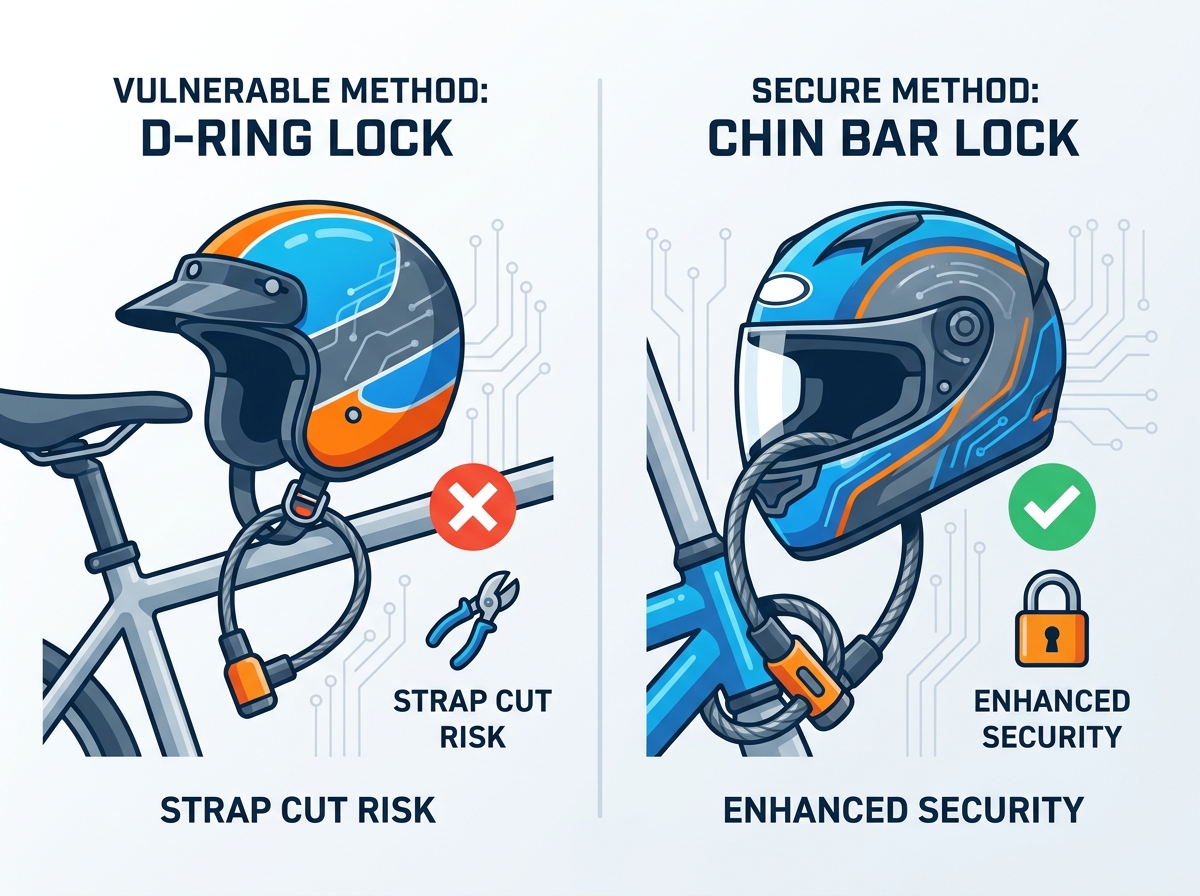
Stock under-seat hooks are free but often vulnerable to thieves simply cutting the helmet's chin strap.
Cable locks routed through the chin bar of a full-face helmet offer superior security compared to locking just the D-ring.
High-crime urban parking requires a different lock class (U-locks or heavy-duty chains) than a quick stop in a rural area.
Expensive Bluetooth communicators and visors require separate consideration, as a locked helmet shell does not protect snap-on accessories.
Defining your threat level matters immensely. You must evaluate your parking environment honestly. Different locations present completely different challenges.
Low-risk scenarios include suburban gas stations. You might stop for a quick coffee. Rural diners also fit this specific category. Thieves act opportunistically in these places. They grab unsecured items and run quickly. A basic visual deterrent works remarkably well here. Pocket-sized locks prevent these crimes easily. Criminals rarely carry heavy cutting tools here.
High-risk scenarios involve all-day urban commuting. Overnight street parking poses massive threats. Criminals carry heavy tools in major cities. They use large bolt cutters or sharp knives. Defending against targeted theft demands robust hardware. You need thick steel chains in these environments. You cannot rely on visual deterrents alone.
The "Strap Cut" reality surprises many riders. People assume D-ring locks provide enough security. This assumption fails routinely in the real world. Thieves slice the nylon strap effortlessly. Cutting the strap detaches the shell instantly. The thief ruins its riding utility completely. However, they can still sell it. Uneducated buyers often purchase these damaged goods. Relying solely on a D-ring invites trouble. A motorcycle helmet requires comprehensive structural protection.
Consider placement risks carefully. Where you rest your lid matters immensely. Environmental hazards ruin expensive gear daily. Riders often overlook these silent threats.
Resting it against a hot exhaust pipe melts the outer shell.
Hanging it on a rearview mirror seems highly convenient initially.
This mirror habit severely damages the internal EPS safety liner.
The mirror compresses the shock-absorbing foam continuously.
Compromised EPS fails catastrophically during a high-speed crash.
Always place your gear securely on a flat surface. Your seat or gas tank provides safer resting spots. Keep it away from sharp metal edges. Avoid areas exposing it to leaking engine fluids.
Manufacturers sometimes integrate security features directly. These save you money upfront. However, they present distinct usability challenges. You must understand their mechanical limitations.
Under-Seat Helmet Hooks offer a classic approach. Manufacturers weld simple metal hooks under the pillion. You remove the passenger seat completely. You slide the metal D-ring over the hook. You then press the seat back down securely. It locks the ring inside the under-seat compartment.
Pros: This method costs zero dollars. You require absolutely no extra gear. It utilizes factory-designed hardware safely. It keeps your ignition key consolidated.
Cons: Deploying this takes annoying effort. Quick stops become tedious, frustrating tasks. The design heavily exposes the nylon strap. Criminals easily execute the strap-cut maneuver. Furthermore, modern sportbikes often omit these hooks entirely. They lack the necessary under-seat clearance.
Factory Frame Locks represent an older design philosophy. Vintage Japanese bikes often feature them. Some modern cruisers still offer these mechanisms. Manufacturers weld a lock cylinder onto the subframe. You insert your ignition key to open it. You attach your D-ring and close the metal pin.
Pros: These provide excellent daily convenience. You use your existing ignition key. You never worry about forgetting a combination code. The hardware remains permanently attached.
Cons: They position your gear very poorly. Your lid often rests against a dirty rear tire. Sometimes it leans against hot exhaust components. They rely entirely on D-ring attachment. This leaves you highly vulnerable to strap-cutting thieves. Road grime also jams these keyholes frequently. You must lubricate them constantly.
Built-in options often fall short. Aftermarket solutions fill these security gaps perfectly. You must choose the right tool carefully. The market offers several distinct categories.
These serve as lightweight, pocket-sized deterrents. They fit inside any riding jacket easily. You carry them without noticing the extra weight.
Use Case: They work excellently in low-risk environments. Use them during quick restroom breaks. They secure your gear while you grab lunch.
Evaluation: Manufacturers often rubberize the metal body. This rubber coating protects your bike's paint effectively. You set a simple three-digit combination. You snap it onto a D-ring quickly. They deploy in seconds.
Limitations: They typically only secure the D-ring. Heavy tools easily defeat their thin metal construction. A strong strike breaks the internal locking mechanism. They offer minimal resistance against determined attacks.
These provide a massive security upgrade. They offer superior flexibility for daily riders. Many seasoned commuters swear by them.
Use Case: You route a flexible cable through the chin bar. Full-face and modular designs accommodate this perfectly. They loop around your motorcycle's frame.
Evaluation: This routing prevents the strap-cut workaround entirely. Cables offer highly flexible attachment options. You can secure multiple lids together safely. You can attach them to handlebars easily. You can wrap them around thick frame rails.
Limitations: Standard wire snips defeat thin cables quickly. Always choose thick, braided steel versions. Look for vinyl-coated cables to prevent scratches. Cheap plastic coatings crack in cold weather.
Sportbikes often lack traditional storage space. Naked bikes face similar utility issues. Permanent aftermarket additions solve this problem beautifully. They blend into the motorcycle's aesthetic.
Use Case: You bolt these hardware pieces directly onto your machine. They become permanent fixtures. They replace existing factory bolts.
Evaluation: They offer high convenience for daily commuters. They keep your gear away from hot engines. They provide a dedicated, secure mounting point. They utilize secure, proprietary keys.
Limitations: Installation requires basic mechanical skills. They also limit handlebar hardware compatibility. You cannot always use bar-end mirrors alongside them. They cost significantly more than basic cables.
Aftermarket Lock Comparison Chart
Lock Type | Ideal Scenario | Security Level | Portability |
|---|---|---|---|
Carabiner Lock | Quick coffee stops | Low | Excellent |
Steel Cable | Urban daily commuting | Medium to High | Good |
Bar-End Mount | Permanent convenience | Medium | N/A (Mounted) |
Heavy U-Lock | Overnight street parking | Maximum | Poor |
Every motorcycle category demands a unique approach. You must adapt your security to your machine. Generic advice rarely works perfectly across all models.
Touring Bikes and Baggers (Hard Luggage)
These massive machines provide the ultimate security advantage. Out of sight means out of mind. Locking a motorcycle helmet inside a hard top case removes temptation. A locking saddlebag offers the only true zero-risk method. You hide the item completely from public view. Criminals rarely pry open secure touring cases blindly. Always ensure your luggage locks function properly. Keep the internal hinges lubricated. Avoid stuffing the box tightly. Pressure can scratch your expensive visor against hard plastic walls.
Sportbikes and Naked Bikes
Minimal storage requires creative external solutions. You cannot rely on built-in compartments here. Focus on using frame-mounted cable locks. Route a heavy cable through the chin bar. Rest your gear securely on the flat gas tank. You can also rest it on the instrument cluster. This prevents accidental drops effectively. Drops crack the outer shell instantly. Secure positioning prevents wind from knocking it over. A scratched tank ruins your day quickly. Always use a microfiber cloth underneath.
Cruisers and Vintage Bikes
These machines feature extensive exposed metal frameworks. You have numerous anchor points available. Utilize tall sissy bars for secure attachment. Engine guards provide another excellent anchor point. Employ heavy-duty carabiner locks here safely. Ensure nothing rubs against polished chrome parts. Avoid positioning anything near hot pipes. Exhaust heat melts polycarbonate visors within seconds. Engine vibrations can cause locks to scratch paint. Keep the locking mechanism wrapped tightly. Position the shell facing downwards to prevent rain collection.
Modern riders carry expensive electronic gear. Securing the shell solves only half the problem. You must protect the attached technology.
The Accessory Vulnerability
A locked shell does not protect attached tech. Snap-on mesh communicators cost hundreds of dollars. Transitions visors also represent significant financial investments. Action cameras add even more value. Thieves pop off these units instantly. Securing your main shell ignores these highly valuable add-ons. You must address this specific vulnerability proactively. A thief spots a branded comms unit from across the street. They steal it in three seconds flat.
Quick-Release Management
Establish a strict removal protocol today. Pop off the comms unit every single time. Place it safely inside your jacket pocket. Do this before leaving your machine unattended. Taking it removes the temptation entirely. Pocketing your unit takes minimal effort. This simple habit saves you hundreds of dollars. Store your action camera safely too. Rain can also destroy electronics left outside. Sun exposure degrades the battery life over time. Detachment protects against both theft and weather.
Strategic Cable Routing
Some riders permanently mount their comms units. Tape or clamp mounts make removal tedious. Route a thin cable lock directly over the mounting bracket. Weave the cable over the unit itself carefully. This makes snapping the unit off physically impossible. A thief would destroy the device completely. Destroyed units hold zero resale value globally. This aggressive logic deters criminals effectively. Follow these exact steps for permanent mounts:
Identify all easily removable accessories.
Thread a thin secondary cable through the comms bracket.
Loop it securely back into the primary chin bar lock.
Ensure the cable maintains slight tension over the device.
Summarizing the evaluation process takes only a moment. Match your lock type to your parking environment. Consider your bike's storage capacity carefully. Factor in your lid's total monetary value. Low-risk rural stops require vastly different tools than high-crime urban parking.
We highly recommend starting with a specific setup. Buy a heavy-duty, rubberized cable lock today. Route it exclusively through a full-face chin bar. This creates the most versatile baseline solution possible. It prevents strap cutting efficiently. It protects your paint from ugly scratches.
Keep one final reminder in mind constantly. No external lock is completely theft-proof. A determined thief carrying power tools wins eventually. Battery-powered angle grinders slice through thick steel in seconds. If you park overnight in a high-crime area, change your strategy. Take your gear inside your home or office. Physical separation remains the absolute ultimate security tactic.
A: You can do this only if secured properly. Use a sturdy lock. Strictly avoid hanging it by the mirror. Mirrors compress the internal EPS foam liner severely. This compression causes permanent structural damage. Compromised EPS will fail catastrophically during an impact. Rest it securely on the flat gas tank instead.
A: It successfully stops casual, opportunistic thieves. However, it remains highly vulnerable overall. Criminals frequently execute strap-cutting techniques. They cut the nylon strap easily. This renders the item useless for riding safely. They still sell it for replacement parts. We strongly recommend chin-bar locking for full-face models.
A: Bare metal locks certainly damage paint over time. You must evaluate lock materials carefully. Choose options featuring thick rubberized coatings. Plastic sleeves also prevent harsh metal-on-metal contact. You can utilize a protective soft bag during the locking process. This simple step protects your tank paint and delicate fairings.


