
Views: 0 Author: Site Editor Publish Time: 2026-08-16 Origin: Site


Every rider faces a tough choice when gearing up. You want absolute maximum head protection on the open road. However, premium safety gear demands a significant financial investment. Balancing rider safety against these high costs creates a serious core dilemma. Many riders openly suspect replacement timelines are simply clever marketing tactics. They assume brands just want to sell more expensive gear. This widespread skepticism leads some people to wear compromised equipment dangerously long past its protective prime. We will break down the widely accepted industry-standard baseline known as the 5-year rule. You will discover how actual replacement urgency depends heavily on complex material science. It also depends on your daily usage habits and specific physical events. Keep reading to learn exactly when you must retire your current lid.
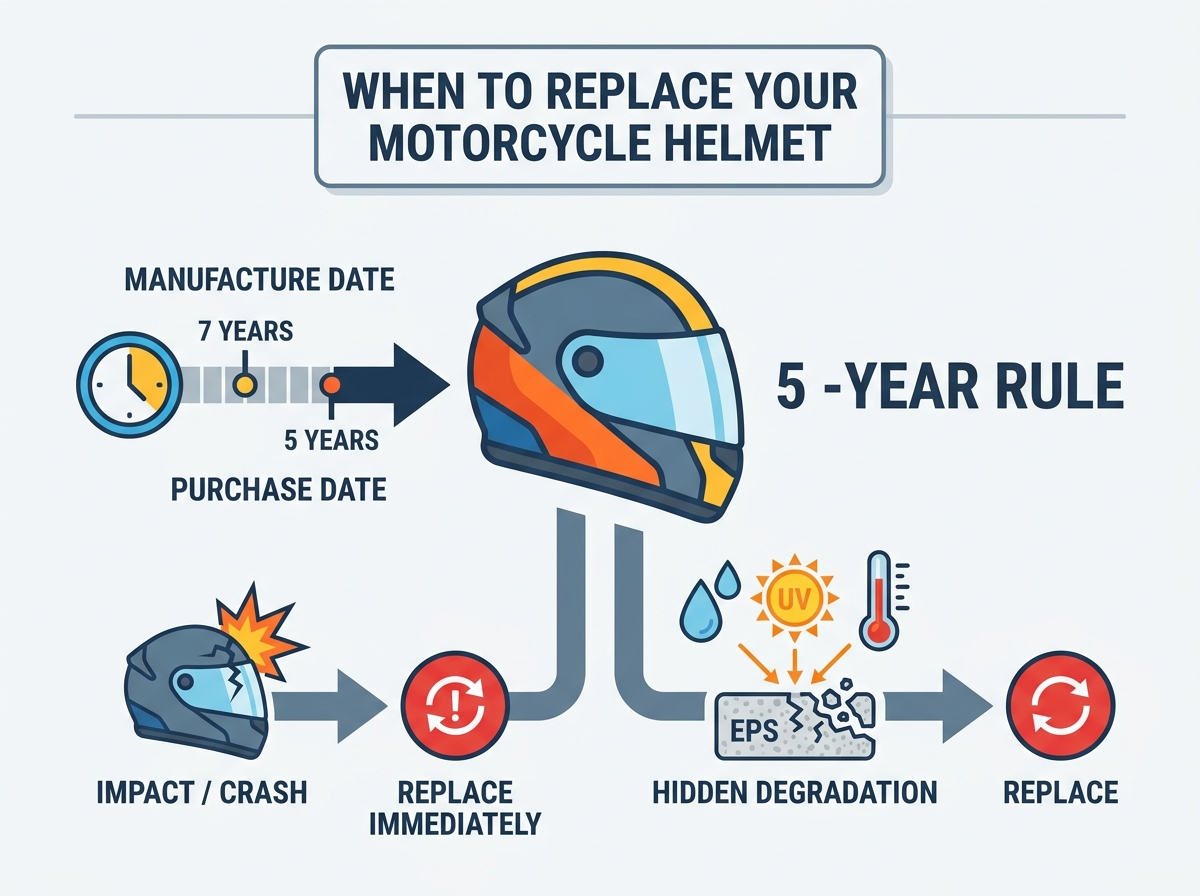
The general consensus among safety foundations (like Snell) is replacing a motorcycle helmet every 5 years of use, or 7 years from the manufacturing date.
Any impact or crash automatically necessitates immediate replacement, regardless of visible damage.
Internal EPS (Expanded Polystyrene) foam degrades invisibly over time due to sweat, hair oils, and temperature fluctuations.
Upgrading provides access to newer, more rigorous safety standards (e.g., ECE 22.06).
Many riders strongly question the famous five-year replacement window. They wonder if safety brands just want higher retail sales. Science tells a very different and compelling story. You need to understand the critical difference between the actual manufacturing date and your initial purchase date. The production sticker usually sits hidden beneath the comfort liner. The lifespan clock starts ticking differently for shelf life versus active street use. A motorcycle helmet sitting safely inside a climate-controlled warehouse degrades much slower. Active daily wear accelerates aging dramatically.
Some people buy discounted gear on clearance. They think they scored a fantastic deal. However, they might purchase stock sitting on a dusty shelf for three years. You only get two useful years of riding in this specific scenario. The natural off-gassing process happens continuously. It occurs even inside a dark cardboard box. We always recommend checking the production date before paying. Walk away if the date is already several years old.
We must look closely at internal EPS foam degradation. EPS stands for Expanded Polystyrene. This vital internal layer handles kinetic energy absorption. It compresses deeply during a violent physical impact. Chemical realities dictate its functional lifespan. EPS foam naturally hardens and shrinks over long periods of time. It eventually loses the ability to manage kinetic impact transfer properly. Brittle, aged foam transfers lethal crash energy directly into your skull. This scientific reality makes old foam extremely dangerous.
Outer shell fatigue also plays a massive role in overall safety. You must contrast polycarbonate plastics against advanced composite materials. Composites include woven fiberglass or lightweight carbon fiber. UV exposure breaks down injected plastics much faster than premium composites. Atmospheric petrochemicals also degrade polycarbonate shells quite rapidly. Fiber-reinforced shells offer superior longevity against daily environmental elements. They resist sun fading and chemical damage significantly better.
Independent testing perspectives firmly back this five-year metric. The Snell Memorial Foundation validates the rule based entirely on structural material breakdown. These independent standards focus purely on objective rider safety. They do not care about manufacturer sales goals. Scientific testing clearly proves materials lose their protective qualities after half a decade. A common mistake is assuming a pristine exterior means the interior remains safe. Always trust the science over visual appearances.
Some high-risk situations demand you throw your current lid in the trash today. Post-crash protocols remain entirely non-negotiable for any rider. Modern head protection devices serve exclusively as single-use impact tools. The EPS foam compresses permanently to absorb violent shock. It simply does not rebound back into its original shape. A crashed lid cannot protect you twice. You must replace it immediately after any collision.
Impact energy travels through the outer shell first. It immediately transfers into the soft inner layer. This foam crushes permanently to slow down your head safely. It acts exactly like a car crumple zone. You cannot repair a crushed crumple zone. A crashed shell might look perfectly shiny on the outside. The hidden damage underneath remains deadly. You risk severe concussions wearing previously crashed gear.
Riders frequently debate the dropped helmet reality. Falling from a tall motorcycle seat or handlebars happens quite often. We must differentiate between a harmless cosmetic shell scratch and dangerous potential micro-cracking. A simple, empty drop onto soft grass usually causes zero structural harm. However, you must replace the unit if there was heavy weight inside during the drop. A human head inside a dropping lid crushes the internal foam instantly. You also must replace it if you suspect the exterior shell's structural integrity is compromised. Hard drops onto jagged concrete require professional inspection.
You must carefully inspect compromised fasteners and retention straps. A fraying chin strap represents an absolutely catastrophic failure point. A failing D-ring or a slipping micrometric buckle completely ruins your baseline rider safety. The strongest composite shell cannot save your life if it flies off during a highway slide. These absolute dealbreakers warrant immediate replacement. Never compromise on structural retention systems. Best practices dictate checking your chin strap for excessive wear every single month.
Your daily riding environment silently attacks your protective gear. Unseen biological breakdown occurs during every single hot ride. Daily commuting introduces heavy sweat and acidic sebum from your hair follicles. Riders also routinely apply skin cosmetics like thick sunscreen and styling products. These biological and chemical agents slowly eat away at the delicate EPS liner. They dissolve the sensitive comfort padding glues. A heavily used motorcycle helmet rots from the inside out.
Severe climate conditions and poor storage risks further accelerate premature aging. Extreme ambient heat destroys internal protective layers very quickly. Leaving your gear inside a baking hot garage invites absolute disaster. Storing it in a sunny car trunk yields similar destructive results. Constant thermal cycling accelerates the natural chemical off-gassing process. Constant heating and sudden cooling forces the EPS to harden prematurely. You lose critical impact absorption capabilities rapidly in poor storage conditions.
Chemical exposure poses another massive, invisible threat to riders. We strongly warn against using improper, harsh cleaning solvents. Harsh workshop chemicals literally melt internal safety structures. Heavy gasoline fumes and aerosol paint sprays near your storage area cause hidden damage. They can rapidly compromise cheap polycarbonate shells. Always store your expensive gear in cool, well-ventilated spaces. Keep them far away from harsh workshop chemicals and fuel cans.
Many riders try cleaning their gear using basic household products. They grab glass cleaners or harsh dish soap. These chemicals strip away protective UV coatings quickly. You expose the bare plastic to harsh sunlight. The plastic then dries out and becomes extremely brittle. We recommend using only warm water. Mild baby shampoo also works well for washing the inner liner safely. Taking proper care extends the usable lifespan significantly.
Environmental Threats Comparison
Threat Type | Primary Source | Impact on Structure | Prevention Best Practice |
|---|---|---|---|
Biological | Sweat, Sebum, Sunscreen | Eats away EPS foam and degrades internal glues | Wash the comfort liner regularly; wear a washable skull cap |
Thermal | Hot garages, Car trunks | Accelerates EPS hardening and off-gassing | Store indoors in a cool, climate-controlled environment |
Chemical | Gasoline fumes, Aerosols | Compromises polycarbonate shell integrity | Keep away from workshops and harsh cleaning solvents |
You can perform a highly effective visual and physical inspection at home. Follow this structured 5-point self-inspection framework carefully. It helps identify critical safety failures early.
Step 1: The Shell Squeeze Test. Check the hard exterior thoroughly. Press inward firmly on the sides. Listen closely for unusual flexing or deep creaking sounds. Look closely for tiny spider-web cracking in the exterior clear coat. These physical signs point directly to severe shell fatigue.
Step 2: EPS Density Check. Press firmly on the black foam hidden beneath the fabric liner. You are checking for overly brittle textures. Heavy flaking or a strange crusty feel means the foam is completely dead. It can no longer absorb kinetic impact energy safely.
Step 3: Comfort Liner Deflation. Assess if your lid now fits loosely on your cheeks. The soft internal padding naturally packs down over time. A loose fit fails to secure your head properly during a violent crash. This sloppy fit completely negates the outer shell's expensive protection.
Step 4: Hardware and Visor Mechanism Validation. Test the overall structural integrity of all moving external parts. Check the shield hinges, sliding plastic vents, and visor base plates. Snapping, brittle plastics indicate advanced age and extreme UV degradation.
Step 5: The Smell Test. Sometimes your nose spots hidden trouble first. Identify any strong mildew or deep-seated bacterial growth hiding inside the EPS. You simply cannot wash out deep fungal infestations. Funky, persistent odors usually indicate advanced age and severe biological breakdown.
A common mistake is skipping step two entirely. Most riders only wash the soft fabric pieces. You must physically touch the hard black foam underneath. You also need to inspect the visor hardware closely. Visor base plates endure constant daily friction. You open and close the face shield hundreds of times. The internal plastic springs wear down fast. A loose visor snaps shut unexpectedly at high highway speeds. This sudden distraction causes severe traffic accidents. Replacing base plates helps temporarily. However, worn plates often indicate overall extreme helmet age. Pay close attention to these small mechanical details.
It feels incredibly rewarding transitioning to new, modern buying criteria. Upgraded safety certifications provide immense, tangible value on the street. Moving to a very modern certification like ECE 22.06 offers vast improvements. FIM racing standards also provide tangibly better protection against high-speed crashes. These newer testing protocols rigorously test against violent rotational forces. They outperform older DOT standards significantly. They also surpass older standard Snell metrics. You get vastly superior technology upgrading today.
Material selection heavily dictates long-term structural longevity. You must guide your final choice between fiberglass or carbon fiber versus basic polycarbonate. Premium composite shells offer a much longer structural life. Polycarbonate plastic options remain very budget-friendly for beginners. However, they suffer much faster UV degradation outdoors. Carbon fiber delivers the ultimate strength-to-weight ratio for serious daily riders. It reduces neck fatigue significantly on long cross-country trips.
You should also factor in modern, integrated riding ecosystems. Evaluate new gear based on convenient internal speaker cutouts. Look for strict ECE-compliant communication device integration. Brands like Cardo or Sena require specific interior mounting points. Emergency quick-release cheek pads (EQRS) also save countless lives. Emergency medical responders use EQRS to remove gear safely on the road. They pull these red tabs without injuring your fragile neck.
You must also consider overall ventilation technology advancements. Older gear traps immense body heat inside. Modern designs utilize advanced computational fluid dynamics. They pull cool air across your scalp efficiently. They extract hot air out the back exhaust vents rapidly. Superior airflow keeps you focused and highly alert. It prevents dangerous heat exhaustion during intense summer rides. Upgrading gives you access to these massive comfort improvements.
When shopping for an excellent upgrade, keep these critical evaluation points in mind:
Check for modern rotational impact certifications like ECE 22.06 or strict FIM standards.
Prioritize lightweight composite shell materials over cheap injected plastics for longevity.
Verify the clear presence of EQRS (Emergency Quick Release System) safety tabs.
Ensure dedicated interior cutouts exist for your preferred Bluetooth communication system.
You must carefully summarize the serious risk-to-reward ratio. Pushing a motorcycle helmet far past its usable lifespan risks absolutely catastrophic failure during a critical impact. Saving a few hundred dollars is never worth risking severe, permanent head trauma. Old, hardened gear simply cannot provide adequate kinetic energy absorption anymore. The internal foam becomes way too stiff to crush properly during an accident.
We strongly advise riders to check their manufacture date today. Pull back the inner comfort liner and locate that hidden production sticker. Begin shortlisting viable, modern replacements immediately if your gear approaches the 5-to-7-year window. You should also shop for a rapid replacement if your lid shows early physical signs of structural fatigue. Protect your brain at all costs and enjoy the open road safely.
A: No. You cannot verify the true impact history. You also cannot check the structural integrity of the hidden internal EPS foam. You never know how the previous owner stored it. Avoid used gear entirely to ensure your maximum safety.
A: Replacing the comfort liner fixes loose fitment and basic hygiene issues. It does not replace the critical impact-absorbing EPS foam. If the EPS foam is old and hard, the entire unit must be replaced.
A: Yes. It hasn't faced biological degradation from sweat. However, the EPS foam still undergoes natural chemical off-gassing and hardening. Industrial safety glues also dry out and fail over long periods of time.
A: An empty lid dropped from waist height onto grass or a smooth floor usually only suffers minor cosmetic damage. However, if it hits jagged concrete or a ventilation hard-point, it requires a thorough professional inspection.


